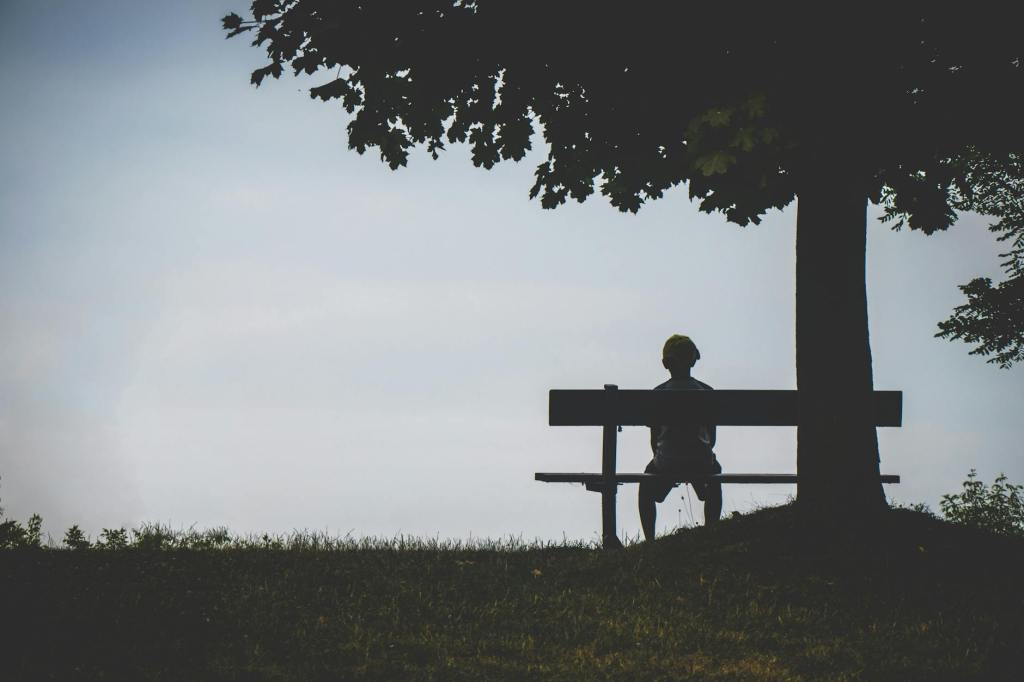
December 11, 2023
I had been in the U.S. for about two months. I celebrated my 21st birthday with a dinner in my dorm room with two roommates, two friends from the team, and my friends back in China who joined online.
December 11, 2024
I had just arrived in Chicago for a business trip. My day started with an audit at 9 a.m. and did not end until 8:30 p.m. Afterward, my manager took me to a fantastic Uzbek restaurant. In that moment, I felt the weight and the wonder of my new professional life.
December 11, 2021 (Three Years Ago)
I had just finished an IELTS class and was planning to eat alone near the university. I mentioned it to a classmate, and after class, several people joined me for a meal. Today, two of them are in London, one is in Hong Kong, and one is in Beijing. I never did take the IELTS, but luckily, I’m now in the U.S. with a place to live and a car. Since starting work, I’ve become fully financially independent.
The year I turned 21 was the year I truly grew up. I stopped seeing the world through naive eyes. I moved from the classroom into society and stepped out of the Chinese bubble into American circles.
That year, I felt lost, I gave up on things, and I tried to escape. But time is always fair. No matter how you live, 22 arrives anyway. Suddenly, I understood so many things my elders had told me and the choices adults make that I never understood before.
Responsibility and self, dreams and reality, future and past. These ideas are tangled together like a red thread. You can’t cut them apart. Sometimes, when my heart is troubled, I want to run back. Other times, I feel at peace and want to keep moving forward. But no matter what, I believe in this short life, I will live as my true self.
A long time ago, I wrote to analyze professional topics. Now, I want to show you the world as I see it, the good and bad, sweet and bitter, ups and downs. I won’t hide anything.
I’m an unconventional Chinese person, a typical Gen Z, the “cool kid” to my foreign friends. Sometimes I say ignorant things; other times I might sound philosophical. I hope you can relax and enjoy the stories I share.
Let’s start with what I learned at 21.
What I Learned at 21
I grew in two main areas:
- System Awareness
- Mindset Shifts
System Awareness: Schools in China vs. the U.S.
Moving to St. Louis and leaving the Chinese community gave me a deeper look into American society, especially their education system.
My School Experience in China
My entire educational life was spent within China’s public system. For six years of elementary school, I inhabited the same classroom with the same cohort. Teachers rotated in and out of our space. This created a “classroom-family,” fostering deep, long-term friendships and instilling a powerful sense of collective honor. Our identity was deeply intertwined.
The American School Experience
Here, the experience is fundamentally different. The concept of a fixed “class” doesn’t really exist. From a surprisingly young age, students are academic free agents, crafting their own schedules. A friendly face one semester might vanish the next.
The very architecture of the school day is different. In China, we stayed put and the teachers came to us. Here, students are in constant motion, migrating between classrooms, while teachers claim their own territories.
This structural difference has a profound cultural impact. The deep, “grew-up-together” bonds that are common in China are much rarer here. The collective identity that feels so natural to me is not a central part of the American educational experience.
It leads to a compelling question: Does this foundational difference help explain why American culture champions the individual hero, while Chinese culture draws strength from the collective?
The Value of a Diploma: A Shattered Assumption
This lesson led me to question one of my most deeply held beliefs: that a prestigious degree was the undisputed key to a successful life.
In China
Most universities are public, so you meet people from all backgrounds. Families highly value education and often make big sacrifices for a better school, which means a brighter future. Tuition is also government-subsidized, making it affordable.
In the U.S.
It’s different. Many Americans don’t go to college after high school. Why?
- Cost: University tuition is very high, even for locals. Many can’t afford it, and not everyone gets scholarships. Student loans are a heavy burden, making a degree a luxury for some.
- Opportunity: You don’t always need a degree. Many high school students start businesses or have side hustles. The entrepreneurial spirit is strong here because starting a company is relatively cheap and can offer tax benefits.
- Less Discrimination: Degree-based discrimination is less severe. While educated people are respected everywhere, those without degrees face less stigma. In the U.S., a high school graduate might earn more than a college graduate.
I have a friend who is a 40-year-old electrician in St. Louis. He earns a $100,000 base salary, plus benefits. Another friend’s mother is a college graduate and a banker at Citibank. She earns $21 per hour with great benefits, but the electrician’s total financial package is stronger.
This changed my view at 21. A degree is just one line on a resume. It doesn’t make you a better person. I still want to study at top schools, but now it’s for the experience, not the status. I am no different from someone who didn’t go to college. In some ways, like street smarts, I might even be behind.
Learning from Friends with Different Lives
I have spent most of my life in academic environments, interacting with people from similar backgrounds. To truly understand America, I knew I had to venture beyond my comfort zone. This led me to friendships with people whose life experiences were vastly different from my own, individuals who had navigated paths I could scarcely imagine.
Their understanding of the world, of survival, and of human nature came from a place I had never been. I understand that some of the terms I use might sound alarming. But to understand this part of America, you have to look beyond the headlines.
In a context where marijuana is legal in many places, its distribution can operate in a gray area, becoming a side business for some. It’s a world built on connections and supply chains.
The two people I met are not stereotypes. One, a creative DJ, did what he felt he had to during the pandemic to make ends meet when opportunities dried up. He has since moved on. The other is a cleaning company manager with a passion for chemistry, an amateur scientist experimenting in his own home lab. His curiosity drives him.
The connection to my world came from a conversation about business. I was looking for a bag for my mom and explained the “daigou” model, buying goods overseas to resell in China. My friend laughed and said, “That’s just like what we did. You’d be a ‘bag dealer’.” The business model was identical; only the product and the legal risk were different.
Seeing Beyond Prejudice
Before I came to St. Louis, I carried a quiet fear. I didn’t believe all Black people were dangerous, but if I encountered a group of Black men on the street, my heart would race. The media had painted a picture that I had unconsciously absorbed.
That fear is now gone. I’ve come to appreciate their directness and the authenticity of their company. I once joked while walking with a group of Black friends that I felt like I’m in the safest group.
But this proximity also revealed a more complex truth. I learned that prejudice is not a simple binary. I saw that discrimination exists within the Black community, based on skin tone and cultural affiliation, much like the regional prejudices we have in China.
It reinforced a fundamental truth:
Skin color shouldn’t divide us. Human nature is the same everywhere.
The DJ friend I mentioned earlier sold drugs to all kinds of people. He saw that some use drugs because life is too painful. The lower end of American society is much lower than in China. Some people grow up without parents, in shelters, or with trauma. Therapy is expensive, but drugs are cheap.
Others approached it as a lifestyle choice, similar to how many Chinese people view smoking cigarettes. Many Americans genuinely believe, based on research they cite, that marijuana is a less harmful alternative to tobacco.
This forces a difficult question: What, truly, is the difference between one dependency and another?
It’s crucial to understand that the homelessness crisis is not a simple result of marijuana use. It’s a complex issue rooted in mental health, economic despair, and harder substances.
While my friends possessed a “street smarts” I lacked, that knowledge came at a potential cost. Their understanding of the world’s darkness was born from navigating its most dangerous corners, where a single misstep could have irreversible consequences.
A Shift in Mindset
In China, I was considered open-minded and risk-tolerant. But here, my thinking can still feel rigid. My path is standard for a Chinese kid: study hard, go to college, find a good job, and advance. But the Americans I meet have their own ideas.
In China, professional dedication often means sacrificing personal time. It’s a cultural expectation. Here, the boundary is firmer. For many Americans, work is a part of life, not the entirety of it. This isn’t just grumbling; it’s a principle. If they feel disrespected or undervalued, they will simply withdraw their labor.
A personal story illustrates this: When my company accidentally delayed my paycheck by a week, my American friends were shocked. They stated bluntly that they would not return to work until the money was in their account. They couldn’t fathom working for free.
Some of this stems from a stronger safety net and the absence of visa pressures that people like me face. But it’s also a deeply ingrained attitude about self-worth and fair compensation.
Of course, many Americans are also passionate about their careers. Their lives aren’t a fixed track; they have more freedom to explore.
I met two American artists. One couldn’t afford college, worked as a security guard, taught himself music, and now tours different states. The other also lacked family support, took loans for computer science, works full-time at IBM, and performs in plays and sings. She recently got sick from overworking.
American culture gives opportunities to hardworking ordinary people and those who want to see the world. But it’s also a place where one wrong step can make you lose everything.
I’m just starting to open my eyes to the world. I don’t have all the answers, and my views come only from my experiences, so they might be biased. If you have thoughts or corrections, please leave a comment!
This is part of my series on life in the U.S. This article was about my understanding of American systems. Next, I’ll write more about financial literacy. I hope you found this interesting.
This article was written on December 23rd, 2024, by Diffie. The author uses DeepSeek to translate.
Original article is below:






 A Wanderer’s Reflection
Leave a comment