Welcome back. In this second post, I want to talk about a question many people may have: why do people become homeless? This is something I’ve been thinking about a lot during my time volunteering at a homeless shelter near my school.
Most of what I share here comes from my own experience and observations. I’ll also try to answer some questions you might have, while giving more context about homelessness in the U.S.
How did you start volunteering at the shelter?
My classmate [Dan] invited me.
Who goes with you?
At the beginning, it was just me, [Dan] , and a Wake Forest senior named [Phi] .
[Phi] had been volunteering alone at a homeless shelter for half a year. She mainly talked with the women there. Later, when [Dan] was asking around about homeless shelters, he learned that [Phi] was already volunteering. Then the three of us started going together every Friday.
Who goes now?
Chinese: me; a female Ph.D. graduate from Wake Forest Medical School named [Z] (I met her playing basketball), her boyfriend [Yij] (graduated from Wake Forest School of Art); and an undergraduate guy invited by [Phi] and [Dan] . Although he is also Chinese, we don’t really know him yet. I plan to say hello and introduce myself next time I see him.
Americans: [Dan] , [Phi] (actually [Phi] is from South Africa, but she immigrated to the U.S. early. She is a blonde girl with a British accent. I really like her), [E] and [Vk]. Except [Phi], all of them are my classmates at Wake
Recently I also invited a close classmate of mine. She is from Congo and her name is [Li]. Since there are some Black people in the shelter but no Black volunteers. As a Chinese, I understand that many Chinese are shy to share their thoughts with people from other cultures. And [Li] is a very kind and lovely person, if she could come, she will definitely bring a different kind of energy.
What is the background of this shelter?
In the U.S., many Christian churches set up shelters for homeless people every winter. There are long term and short term shelters. Ours is a long term shelter. It has two low buildings: one for men and one for women. They have many rules to help residents leave the shelter as soon as possible. During the day, everyone except some disabled people, the elderly, and pregnant women must leave. Also, this shelter is not just a place to stay. It offers counseling services. Some people come here not only because they have nowhere else to go, but also because they can get psychological support here.
Who lives there?
This is a mixed shelter, they have men and women, from all ages, the youngest I’ve seen is 19, and the oldest I’ve seen is in his 70s.
Also, because I go to a shelter, most of the homeless people who can live here are not the “drug addicts” you see on the street.
Most of them have jobs or are looking for jobs. Some might smoke cigarettes or weed (both are prohibited in the shelter, but some smoke outside from time to time). Drugs are strictly forbidden. People who use drugs cannot get a bed at the shelter where I volunteer. Also, people with serious mental illness cannot get a bed here.
A Note on Weed and Cigarettes
Here I want to explain how Americans view weed and cigarettes. Their understanding is almost the opposite of the Chinese understanding.
In China, if someone starts smoking weed, people think he is crazy, that he is using drugs, that he might have a serious illness. But when it comes to cigarette smoking and nicotine addiction, people are not very surprised. They think smoking is normal.
In the U.S., however, people believe nicotine is the truly addictive substance, while weed is not very addictive. Some types of weed can relieve stress. I know many people who never touch nicotine but are fine with weed.
My personal understanding of this difference is this: where there is profit, there is justification.
In China, we have a large government organization, the Tobacco Bureau. The tobacco business brings huge profits to the country every year.
Nicotine is addictive, but its main effect is to keep people alert. It affects personal health but does not cause hallucinations. Weed, on the other hand, changes perception and relaxes people, sometimes causing hallucinations.
China needs a large workforce. A stimulant like tobacco obviously fits the government’s needs for its people better than weed. So China chooses not to do business with weed. Also, China’s history includes the Opium Wars and the destruction of opium at Humen. This history makes Chinese people naturally reject weed. Therefore, regulating weed in China is not a major issue in terms of public support.
For the U.S. government, of course the tobacco business is also good. But historically, the U.S. has never completely banned weed. In the past, Mexico supplied large amounts of weed to the U.S., and the annual smuggling of weed from Mexico brought significant profits to the U.S. government. They are not inclined to reject those profits. If you are interested, you can also learn about Mexico’s operations and its gang organizations.
Of course, today the weed in the U.S. comes mainly from domestic production and no longer relies on Mexico. Also, because the American public is not as strongly opposed to weed as the Chinese are, many medicines use DEA (a chemical component in weed). When I had tonsillitis, I bought throat lozenges at a pharmacy that contained weed components. They did help my throat feel better, and I didn’t experience any addiction symptoms. But I am not a professional, so I won’t say too much about the specific effects.
In addition, there are many weed derivatives, such as gummies, chocolate, and cake. These are not the same as the “drug use” people talk about in China. Americans mostly see them as a way to relax. So for the government, regulating weed is somewhat difficult.
I hope the above helps clarify the differences in how people in different countries view smoking and weed. At the same time, I hope everyone thinks about this rationally. I am just one person with limited knowledge. I welcome questions and feedback to help me learn and improve.
Why Are These People Homeless?
For this question, I will answer only based on my personal experience and understanding.
First, it has a lot to do with the high cost of living.
When I say cost of living, I mean the most basic costs for survival: food, clothing, shelter, and transportation.
Let me start with transportation.
In China, we have convenient public transportation. No matter which city you are in, it is generally easy to get around. You don’t have to own a car to go to work, and no one thinks public transportation is dangerous.
In the U.S., life without a car is very different.
The food delivery system is not as convenient as in China(yeah, Chinese suffers and benefits from cheap labor lol). Anything involving labor in the US is much more expensive than unprocessed goods.
The cheapest way is to buy groceries and cook for yourself. You can order groceries online and have them delivered, but today I want to talk about how a very poor person in the U.S. might live.
You probably don’t want to order online, because unless you buy a lot or have a membership, you will be charged a delivery fee or some type of service fees and tips. The people who deliver your takeout and groceries in the U.S. use their own cars.
So you see, without a car, you can’t even be a delivery driver
Also, the U.S. is not as densely populated as China. The places where you buy daily necessities are often spread far apart.
The year I was in California, I didn’t have a car. The nearest supermarket was a 30 minute walk, or over ten minutes by bike. I remember once I wanted to buy some groceries to cook. I walked to the supermarket and walked back, nearly two hours round trip. And I couldn’t buy much because I had to carry it by hand.
That was when I truly began to understand that in the U.S., not having a car is not just “inconvenient.” It is a systemic barrier.
Public transportation in most U.S. cities has low coverage, infrequent service, and scattered stops. Many places have no bus at all. Even where it exists, delays and cancellations happen much more often than in China.
So in the U.S., owning a car is almost a basic condition for survival. (Of course, unless you live in a big city with a subway, which makes things easier. But only a handful of cities known to most people have subways. Most places lack good public transportation infrastructure.)
And what does a car mean? The cost of buying it, insurance, gas, parking, maintenance. For a low income person, these add up to a heavy financial burden.
Without a car, it is hard to find a job, because many jobs are not in the city center. You cannot get there by subway, and the bus does not go there. You have no way to commute.
No job means no money to buy a car. No car makes it even harder to find a job.
This is a cycle. Once you fall into it, it is very difficult to climb out on your own.
Now let’s talk about shelter.
Renting a place in the U.S. has a surprisingly high threshold. You might think that as long as you have money, you can rent a place. Not necessarily.
Many landlords check your credit history before renting to you. Credit history is at the core of American life. Your credit score determines whether you can rent a place, whether you can get a car loan, and even affects your job prospects.
If you don’t have a good educational background or a high income, your credit score will not be high. Without a good credit score, many landlords will ask for an extra month’s rent as a deposit. If you don’t have enough initial savings, how can you afford that?
But food and clothing might be the easiest to solve.
The U.S. has some basic social welfare programs. Many churches and community service centers provide free food regularly. Also, eligible people can apply for food stamps (now formally called SNAP). Specific policies may change over time, but overall, most homeless people can get enough food to survive. The same goes for clothing. Many places give away free used clothes, and secondhand stores like Goodwill sell things very cheaply.
So you might see a somewhat counterintuitive phenomenon. Homeless people on the streets of the U.S. are not necessarily hungry or in rags. Often, what traps them in their situation is not a lack of food or warm clothing, but the lack of a stable address, a car, or a credit history. Food stamps and used clothes cannot solve these problems.
That is why I feel that simply giving homeless people some food or spare change, while not meaningless, rarely changes anything fundamental. The problem lies further upstream.
Education and the Job Market
After talking about the cost of living, I want to talk about education and the job market.
In China, we are taught from a young age: study hard, get into a good university, find a good job, and your life will be stable. Of course this path has its own problems, but at least the logic is clear. Education is a relatively clear path upward.
In the U.S., this path exists, but it is much more expensive and much narrower.
Public K 12 education is free, but its quality varies greatly and is directly tied to where you live. Public schools in the U.S. get a large portion of their funding from local property taxes. This means schools in wealthy neighborhoods have ample funding, good teachers, and good facilities. Schools in poor neighborhoods have little funding, teacher shortages, and low teaching quality.
In other words, where you are born largely determines what kind of education you receive.
What about university? University tuition in the U.S. is notoriously expensive. Many people graduate with tens of thousands or even hundreds of thousands of dollars in student debt, which takes years to pay off. For people from poor families, university is either unaffordable, or the debt crushes their future options.
Of course, the U.S. also has community colleges with relatively lower tuition, as well as various scholarships and grants. But applying for these takes time, information, and resources. These are exactly what poor families lack the most.
So many people in the shelter have low levels of formal education. It’s not because they are not smart. It’s because they were never on the same starting line.
Now let’s talk about work.
Minimum wage in the U.S. varies by state. But even in states with relatively high minimum wages, it is difficult to cover basic living costs. In some high cost cities, working full time at minimum wage makes it hard even to rent a place, let alone save money.
And many low wage jobs, such as restaurant servers, supermarket cashiers, and warehouse workers, have unstable hours. You might be scheduled one day, then cut the next because of low customer volume. This instability makes long term financial planning nearly impossible.
Among the people I’ve met at the shelter, many have jobs or have just lost them. They are not people who haven’t tried. It’s just that the system leaves them very little room for error. One illness, one job loss, one unexpected large expense, and they can lose their housing.
The U.S. does not have a public healthcare system with broad coverage like China’s. Seeing a doctor is very expensive. Even with insurance, out of pocket costs can be shockingly high. Many low income jobs do not provide health insurance, and buying insurance on your own is too expensive for them.
So a serious illness can sometimes push a person who was barely getting by directly into homelessness.
This is not an isolated case. It is a systemic vulnerability.
Going back to education: without family support or a willingness to take on high student debt, most people’s only option is to skip college and start working after high school. Of course, some people find good jobs after high school and achieve their own “American Dream.”
But that is more a story of the past. In today’s economy, finding a stable and decent job with just a high school diploma is no longer common.
Add to that bad luck, or a lack of ability and connections, and some people cannot find stable work. They can only do low level jobs with low barriers to entry. This puts them at higher risk of becoming homeless.
What Do You Do as a Volunteer at the Shelter?
When local communities or churches provide food, we help distribute it, maintain order, and sometimes clean up. But most of the time, we mainly chat with the homeless people there.
All of us volunteers are students. We cannot provide much material help, such as food, clothing, or job assistance.
At first, I felt like I wasn’t providing any real help. So I wanted to do more cleaning or food distribution.
But later [Phi] told me that the people in the shelter have food and a place to stay. What they deeply lack is human connection. In the previous six months, she had gone every week to chat with the women at the shelter. Sometimes she brought craft supplies for making bracelets and necklaces, and they made jewelry together.
[Phi] said these homeless people very much need to communicate with people outside the shelter. They need psychological and emotional support. As local university students, we have youthful energy and can bring them information and energy from outside the shelter.
For the first week or two, I felt I was not capable of giving them that kind of psychological support.
But now, I understand [Phi] more and more. Every time I go to the shelter, the people there greet me happily. They ask me how school is going and how my studies are. I usually leave school exhausted, but every time I leave the shelter, I feel recharged.
In the past, I saw providing help and listening to their lives and stories as a responsibility. Now I see them as friends who are going through a difficult period in their lives.
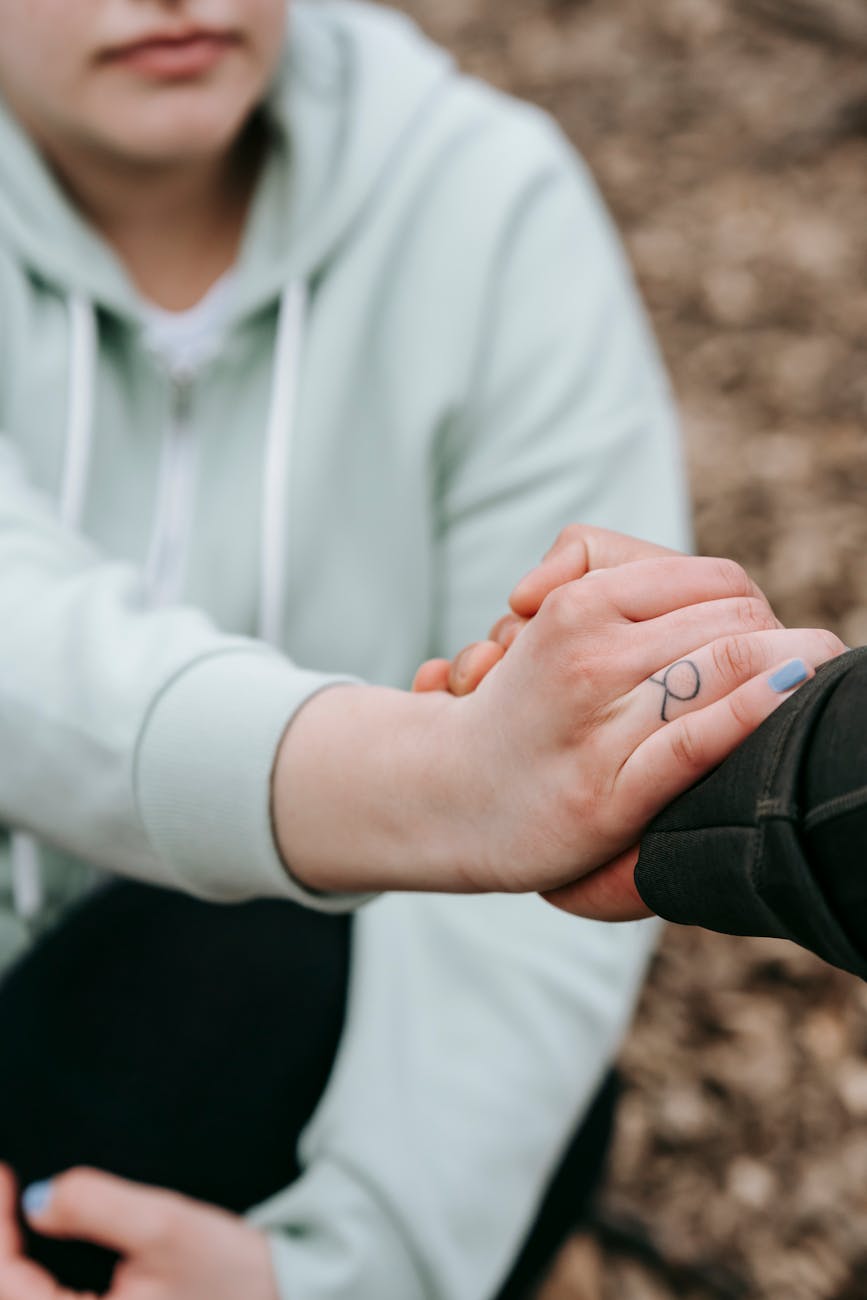
A few times when I was about to leave, an elderly person at the shelter took my hand and said they were very grateful we came. He said that although the residents don’t show it obviously, they look forward to our visits. And when we are not there, they talk about the Wake Forest volunteers.
And last time when I was about to leave the shelter after finished the service, as soon as I walked to the door, a homeless person I had briefly spoken to before called out my name and greeted me happily. Sometimes I feel guilty because I can’t remember all of their names. But I will try to improve my memory.
In short, I now believe that our volunteer work at the shelter is very meaningful.
The People Behind the Statistics
The moments I have witnessed at the shelter are real people. They are no different from us. My writing ability is not strong enough to fully capture their complete stories. But during this time, what has mattered most to me is respect and compassion for strangers who are going through a low point in their lives.
Through my personal experience, among the homeless people I have come to know, some made choices that led them here, some simply had a run of bad luck, and others lacked the support of their families from the start.
Let me give you three examples.
At the shelter, there is a woman in her sixties and a man in his seventies. They chose to live at the homeless shelter. They did not want to go to a nursing home, nor did they want to burden their children. The man told me that his time at the shelter has been the most meaningful period of his life. Outside, he said, he could not meet so many people from different backgrounds. The woman said something similar: the living conditions here are poor, but she has met many kind people. Both of them have since left the shelter, but I still remember their presence.
There is also a 19 year old girl who arrived at the shelter two weeks ago. When I first met her, she was smoking weed. She told me she did not want to face reality. At first, I felt frustrated with her. Here was a young woman who was homeless, yet she seemed unmotivated and unwilling to confront her situation. I asked her where her parents were.
She said very calmly, “I don’t have parents.”
In the United States, many children without parents are placed in foster care. She lived in foster care until she became an adult. But once she turned 18, the foster family had no further legal obligation to support her or take care of her. She was on her own.
She had already been kicked out. She had no work experience. She was essentially a kid who had just finished high school. From a human perspective, I know there are things she should not be doing, but I also understand and respect many of her choices. I have not walked in her shoes, but I know the path she has walked has been very difficult.
Finally, I want to tell you about another woman. She once earned a master’s degree from the University of Michigan. She traveled to Hong Kong as a scholar to study. She served as an executive at a nonprofit organization. So how did she become homeless?
She studied social work. After working for many years, she chose to start her own business. Unfortunately, because she did not conduct thorough market research, her business failed. She lost everything, even her mother’s house was taken away. She chose to leave Michigan and come to North Carolina alone to start over.
I rarely spoke with her at first. Sometimes she would say she was meditating. I did not know her background, only that she seemed like a decent person, quiet and not competitive. It was not until we talked and she learned I was from China that she began to share her life and her story with me. She even gave me a lesson on social work. Looking at the photos of her in Hong Kong when she was young, full of energy and ambition, I knew that this was just a low point in her life. She will rise again.
What Can We Do? Some Personal Thoughts
After spending time at the shelter and listening to these stories, I have started thinking about what might actually help. I do not have all the answers, and I know that homelessness is a complex problem. But based on what I have seen, I believe there are a few directions worth exploring.
First, education programs within shelters. Many people in shelters lack basic job skills or formal credentials. Shelters already provide food and a bed, but they could also offer classes: GED preparation, computer literacy, financial literacy, and even soft skills like interviewing and resume writing. These programs do not need to be large or expensive. They could be run by volunteers, local college students, or retired teachers. If a shelter can help someone gain a skill or earn a certificate, that person has a real chance to leave and never come back.
Second, changing public perception. One of the biggest barriers to helping homeless people is fear and misunderstanding. Many people assume that homeless individuals are dangerous, mentally ill, or addicted to hard drugs. Some are, but many are not. The majority are simply people who fell through the cracks. I used to be afraid too. But after talking to them, I realized they are just like you and me. If more people visited shelters, even once, or volunteered for a few hours, they would see the same thing. I believe that local communities and schools could organize low pressure visits or service days. The goal is not to fix everything overnight. The goal is to replace fear with familiarity. When people see homeless individuals as human beings, everything changes.
Third, a job platform specifically for homeless individuals. One of the hardest things about being homeless is the circular problem: you cannot get a job without an address, and you cannot get an address without a job. But many companies, especially large corporations, have corporate social responsibility programs and budgets for charitable giving. They could go a step further and actively offer jobs to homeless individuals who are ready to work. A dedicated platform could connect shelters with these companies. Local small businesses, especially those owned by people who do not discriminate, could also be part of the solution. Restaurants, retail stores, warehouses, and cleaning services often have entry level positions. If a platform could verify that an applicant has completed certain shelter requirements (such as staying clean and attending basic training), companies could hire with more confidence. This is not about giving handouts. It is about giving opportunities.
These are just my initial thoughts. I know that implementing any of them would be difficult. But after seeing the resilience and humanity of the people I have met at the shelter, I feel that we owe them more than spare change and old blankets. We owe them a real path forward.
To Be Continued
Of course, the story about homeless people does not end here. It is to be continued.
I’m graduating in May and might not stay here in this city. But I’m getting friends coming to the shelter with me so that they can continuing the work.
People come and go, but the kindness and love never leave us.




 A Wanderer’s Reflection
Leave a comment